Category Archives: Family Travel

Chased by a Cyclone

As we prepared to travel to Cairns, Australia, for our visit to the Great Barrier Reef, a news item caught our attention. Almost in passing, the television news anchor said, “A tropical cyclone is off the coast of northern Queensland.”  We paid close attention and learned about Tropical Cyclone Nathan, which would become our companion and nemesis for several days. 

Because we are veterans of hurricanes on Florida’s Gulf Coast, we know to keep an eye on the storm forecast while making our plans. And we know that such plans are subject to change if a storm changes direction. 

As we arrived at Trinity Beach, just north of Cairns, Nathan was offshore churning west toward the coast. The waves were higher than normal with plenty of rain, but Nathan then veered north and started heading away from land. 


As planned, we travelled to Green Island and Norman Reef (more on our time on the Great Barrier Reef in a future blog post).  While at Green Island with its beautiful weather, I saw the newspaper headline, “Second Coming,” warning of Nathan’s u-turn and return toward land. 


Our time at Green Island was excellent, but the twenty-seven kilometer catamaran ride back to Cairns was rocky and windy. The crew was helpful and kindly provided seasickness bags to many passengers. Thankfully, we did not need them!

We returned to Trinity Beach and waited. We regularly checked the Australian Bureau of Meteorology’s website for updates. After heading away a few days before, Nathan was coming back even stronger.  The storm was expected to intensify to a Category 3 or 4 Cyclone. 


We joined heaps of Australians at the market buying bottled water and canned food. It reminded me of empty shelves of milk and bread when snow is forecast in the American South.  Our host graciously said that we could come to her hillside home should the storm bear down on us. 

What happened?  

Tropical Cyclone Nathan eventually turned north and came ashore far away from us. We had periods of rain and higher than usual tides, but these gave us a great chance to catch up on reading as we enjoyed canned food and delicious bottles of water.  After a couple of days, the skies cleared, the waves settled down, and beautiful weather returned. 

All was well!


Ten Things I Loved about Japan

Our family had a great time in Japan.  While I loved many things about Japan, here are ten things I especially loved:

1.  Excellent Rail System

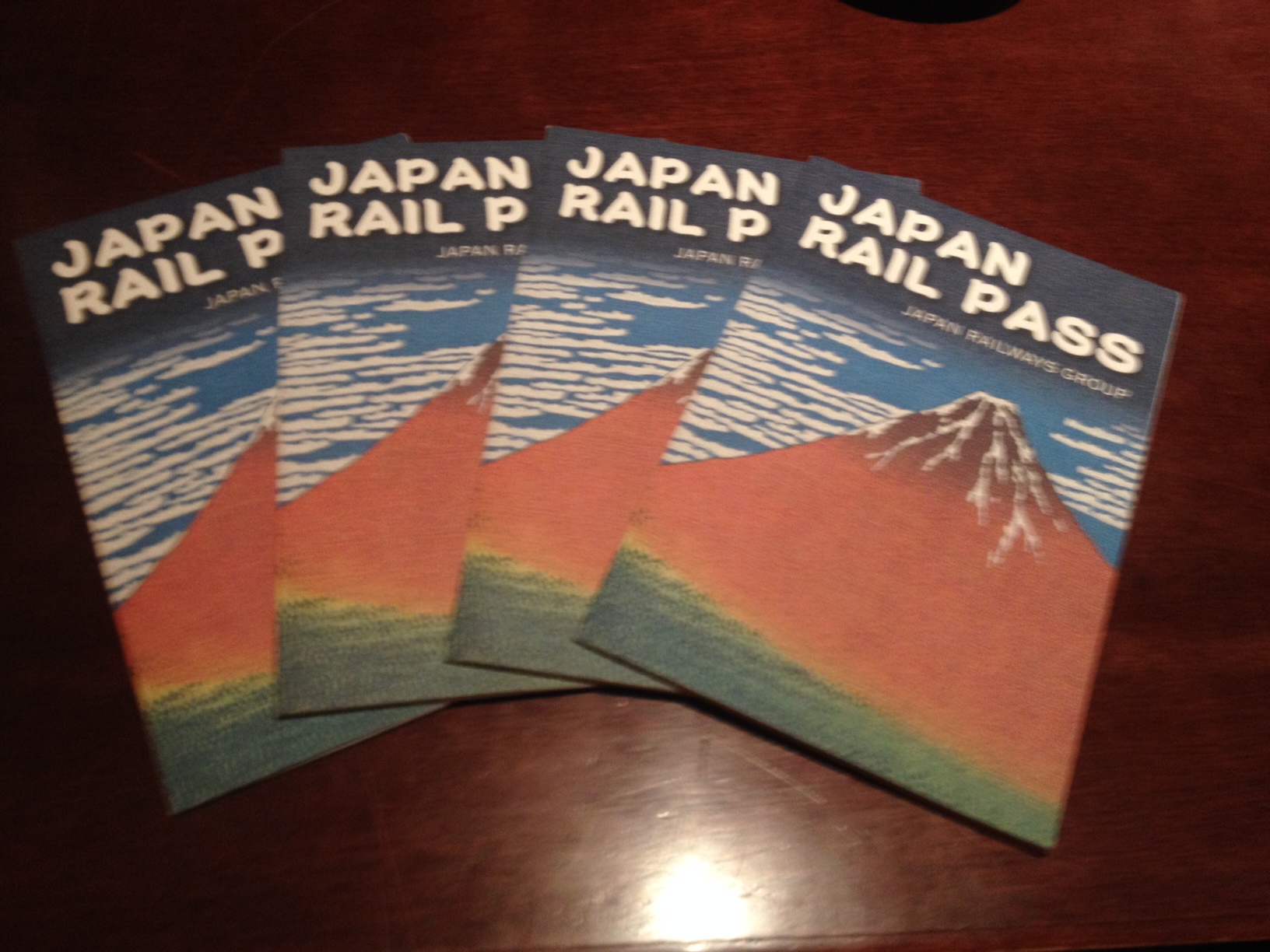
During our round-the-world trip, we often have rented cars to travel in different countries.  I am a big proponent of public transportation, but with four travelers, it often is cheaper to have a rental car than to buy tickets for each one of us.  Plus, a rental car provides flexibility.  In Japan, however, we used the train system to travel, and it was a great decision for our family.  We purchased a Japan Rail Pass, which you must buy outside of Japan, and it allowed us to travel between major cities such as Tokyo, Kyoto, and Hiroshima.  At times, such as in Hiroshima, the JR Pass allowed us to travel on buses, and in Tokyo, we used our JR Pass on many subway lines.  We also used the JR Pass to travel by monorail to Tokyo’s Narita Airport for our departing flight.  It was well worth the expense and saved us considerable time and money.

Japan Rail Pass

2.  Shinkansen (Bullet Trains)

While the bullet trains are part of the rail system, they deserve special mention.  All four of us are big fans of the bullet trains!  We loved the fast and smooth rides as we traveled around the country.  Here’s a tip:  if you arrive at a station with enough time, you may stop by a ticket office and get a reserved seat on the bullet train, which we did on a number of occasions.  If you are rushing to make a train, which you can be sure will depart right on time, then you can ride in certain cars without a reserved seat.  We did this a number of times, and it was just as comfortable.

Shinkansen

3.  Biking around Kyoto

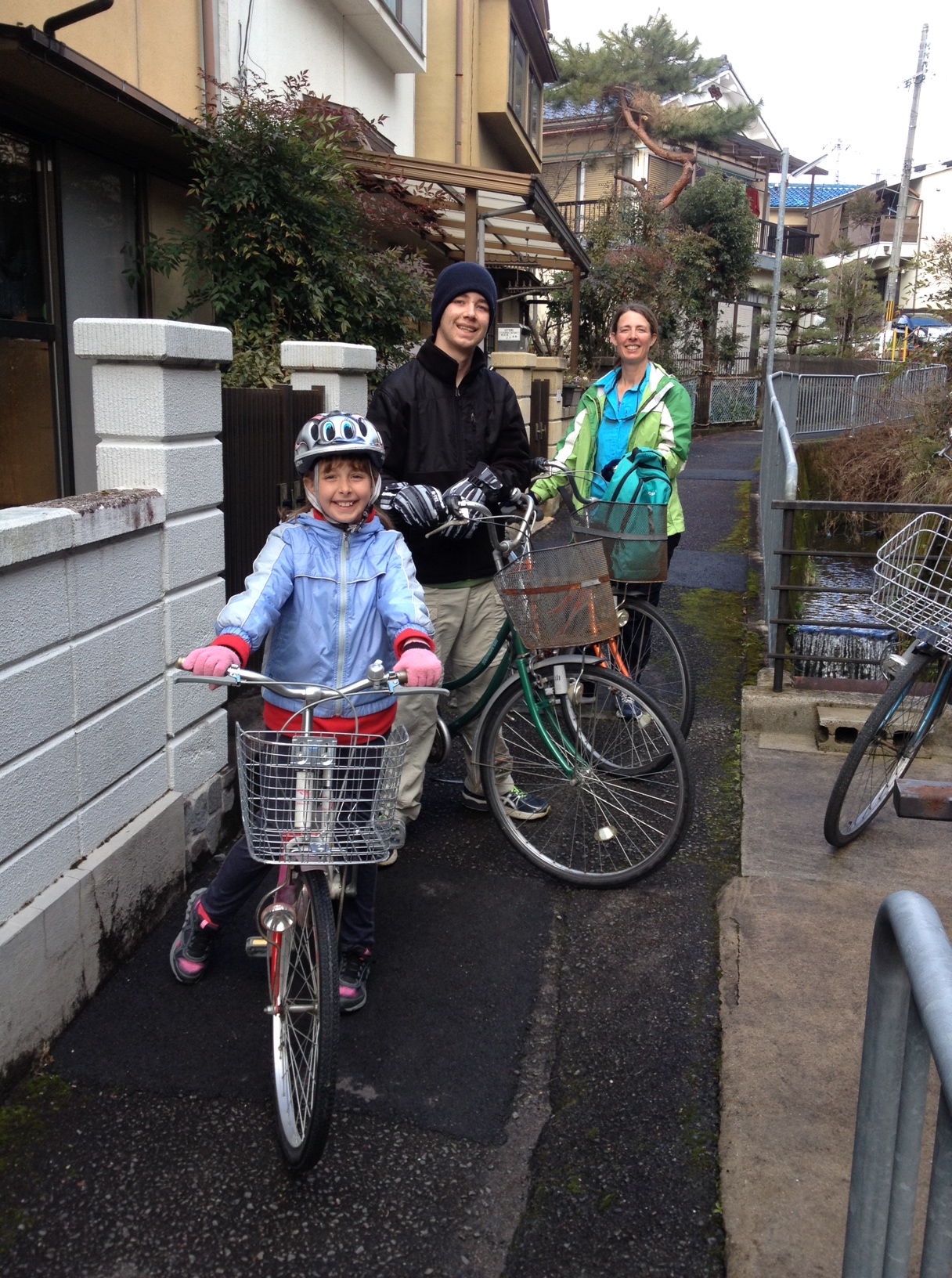
During our stay at the Apple House in Kyoto (a house we highly recommend with a wonderful host, Hiroko James,), we used two bicycles that Hiroko provided and rented two more bikes.  We pedaled our way around Kyoto, which was both good exercise and a fantastic way to see the city.  It is easy to park a bike nearly anywhere in Kyoto.  In many cases, you can simply park outside a building on the sidewalk with other bikes, or you may use bicycle parking stations located throughout the city.

Bicylcing Kyoto

4.  Japanese Food

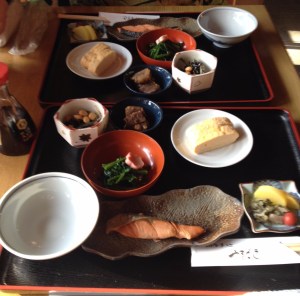
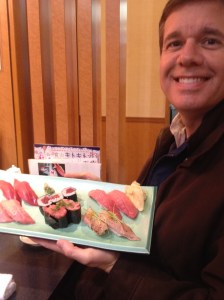
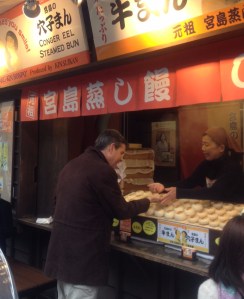
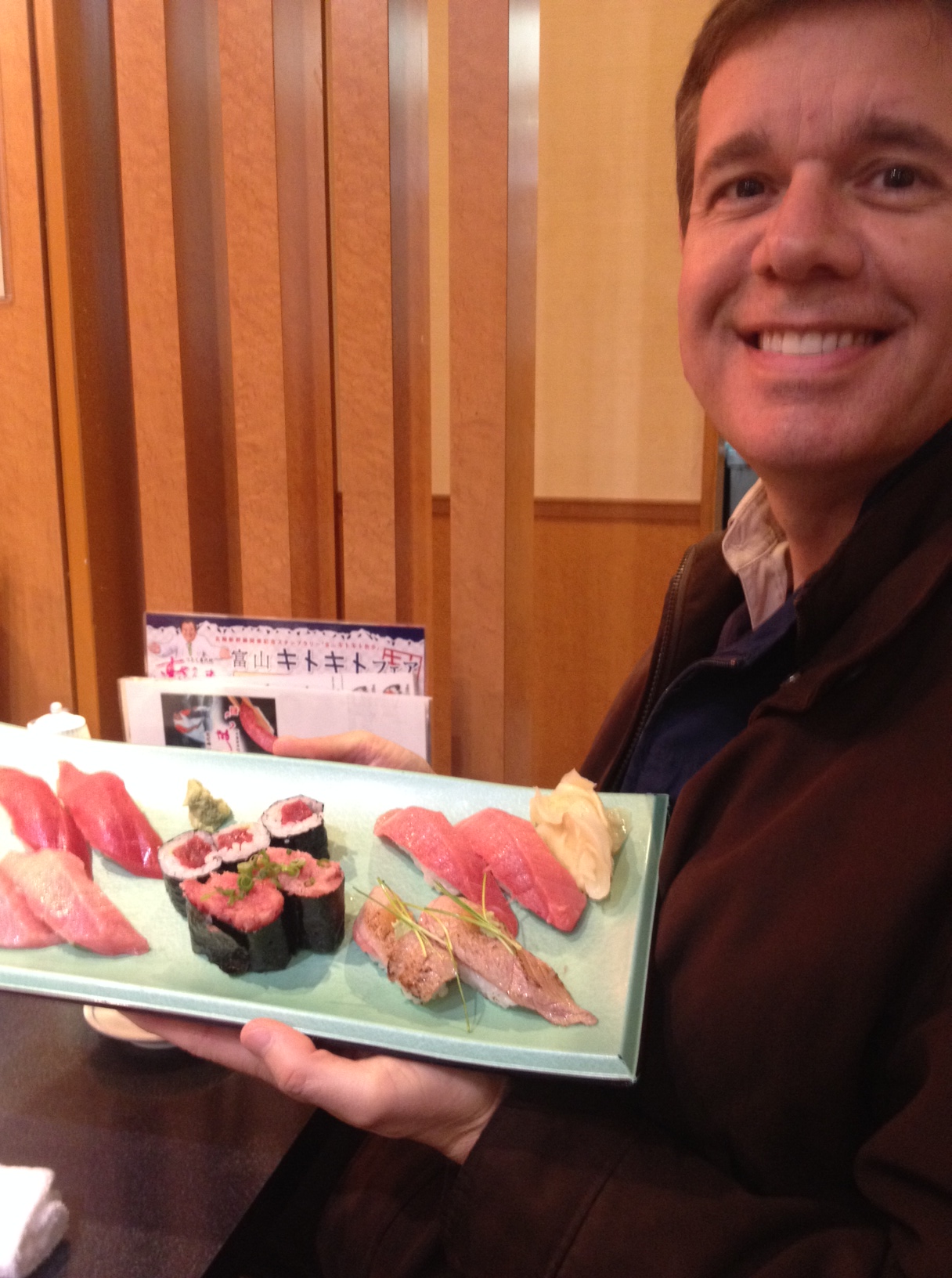
We ate, and ate, and ate across Japan.  And the food was delicious!  From a Japanese breakfast at Ryokan Yamakazi (a traditional Japanese inn); to sushi; to noodles; to Syojin Ryori, Buddhist vegetarian cuisine at Shukubo Eko-in Temple in Koyasan; to steamed buns; to dumplings and tempura, the food was excellent.  Here’s a tip:  for the best prices, purchase excellent prepared food in grocery stores or in food markets on the bottom floors of department stores. I loved Japanese food before visiting the country; I crave it now!  (In fact, I had it for lunch today!)
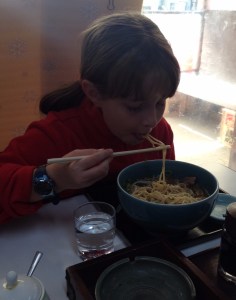
Rachel eating noodles

Japanese breakfast

Dean Sushi

Steamed Bun

5.  Japanese Architecture

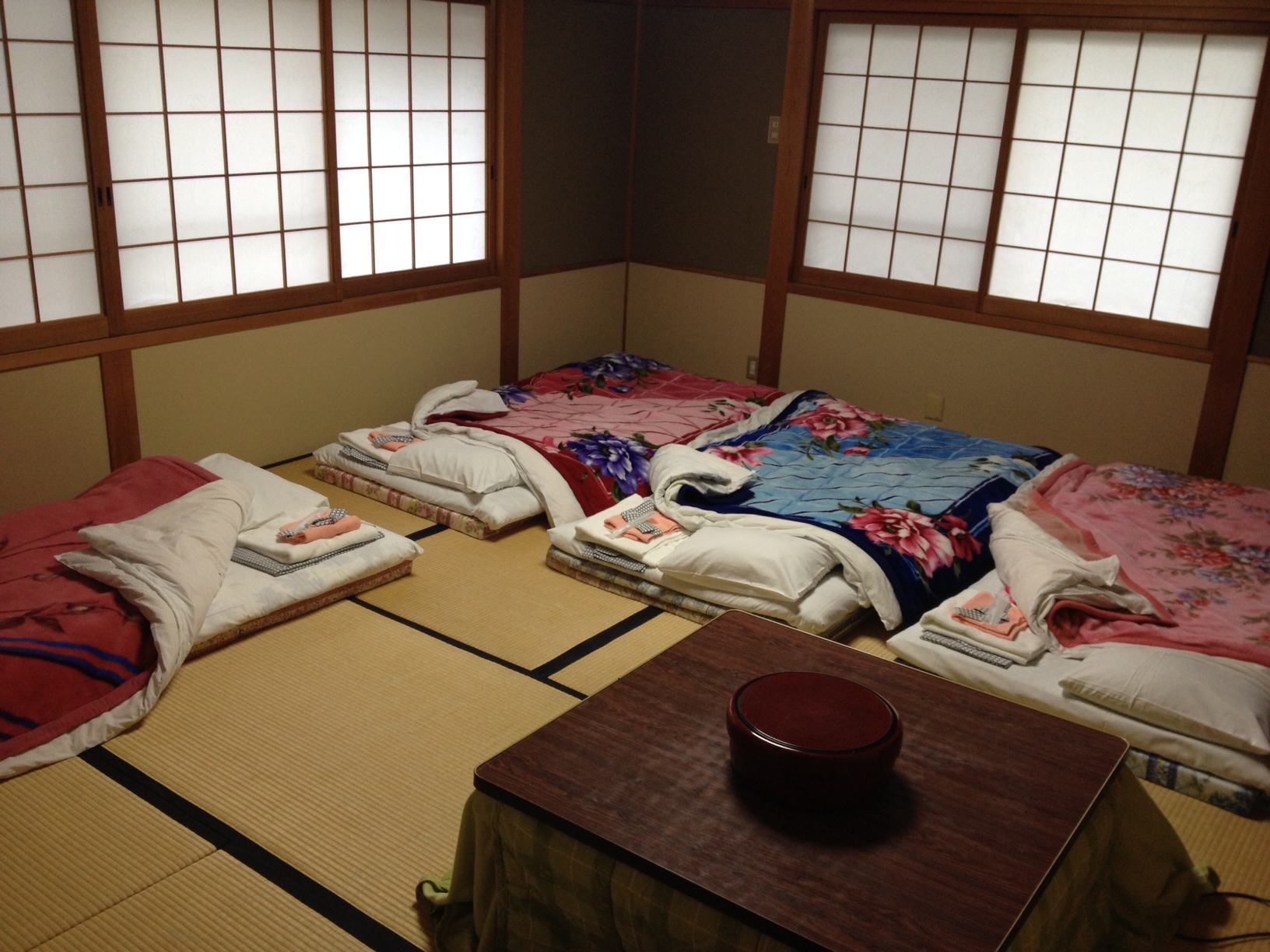
Thankfully, we were able to stay at places with traditional features such as tatami (straw mats), futon (sleeping mattresses), shoji (sliding doors), and sento (Japanese baths).  Loved them!

Ryokan

6.  Samurai

We learned about samurai, military nobility of feudal Japan, who are not to be confused with ninja, more mercenary fighters.  We had a great time at Samurai Kembo in Kyoto.  It’s a bit expensive, but if you have a chance to go, I encourage you to do it.  We are glad we did!
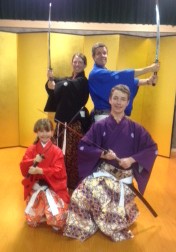
Samurai

7.  Japanese Traditions

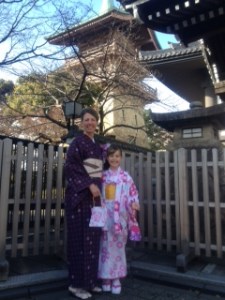
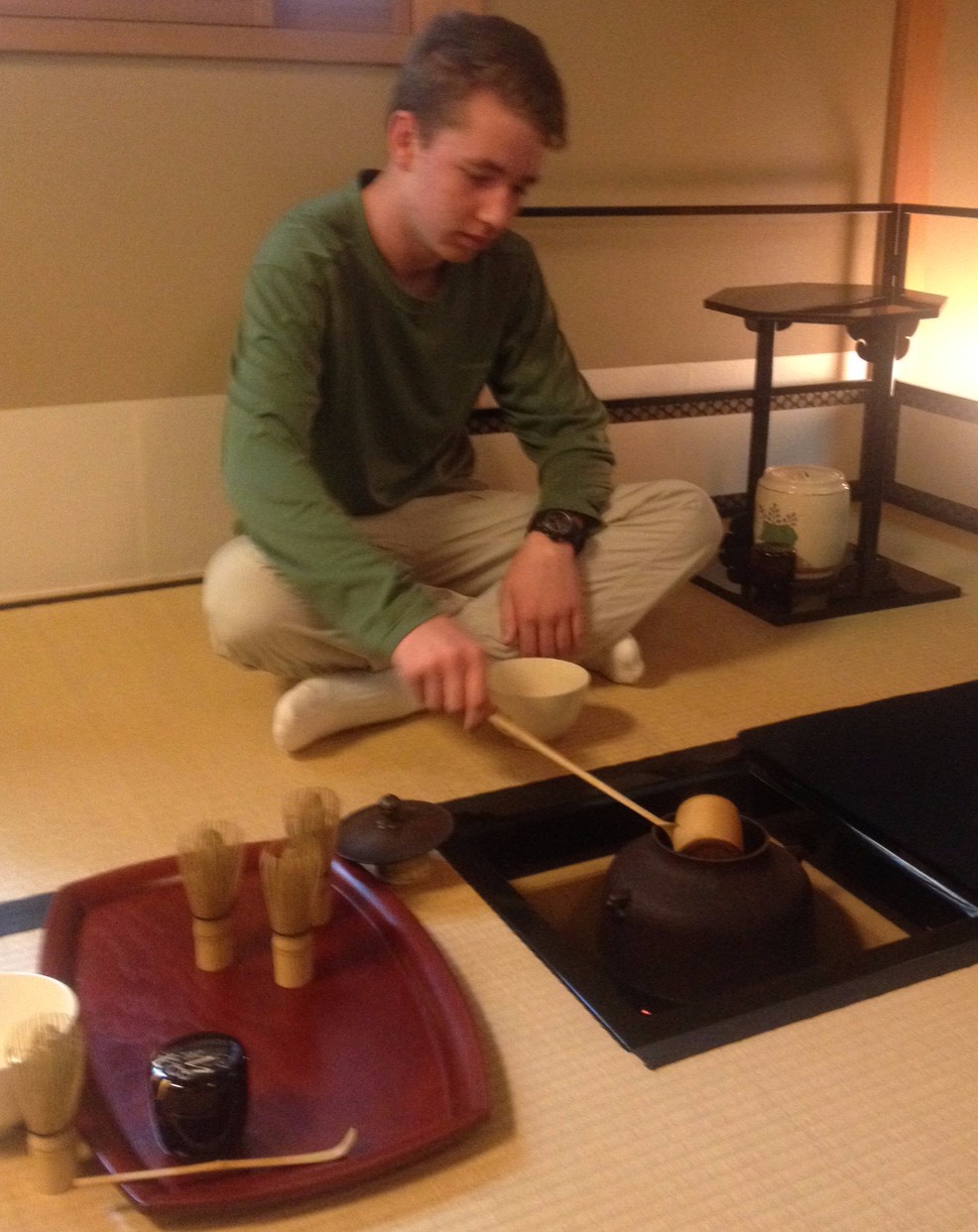
Thanks to my wife, Lisa, who took the lead in organizing and booking our Japanese trip, we enjoyed special experiences of the Japanese Tea Ceremony and Kimono.  All four of us participated in a tea ceremony, and in another adventure, Lisa and our daughter, Rachel, were dressed in Kimono.

Rachel Lisa Tea Ceremony

Tea Ceremony Jonathan

Kimono

8.  History

I have written in a previous blog post about our trip to Hiroshima, which was chilling and moving, and I am grateful to learn more about this part of Japan’s history.  Japan’s history, of course, is much, much longer, wider, and deeper than World War II, and I loved learning more about Japanese history with special attention to its religious history.
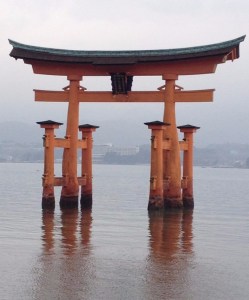
Floating Torii gate at Itsukushima Shinto Shrine, Miyajima

Floating Torii gate at Itsukushima Shinto Shrine, Miyajima

9.  Japanese Machines

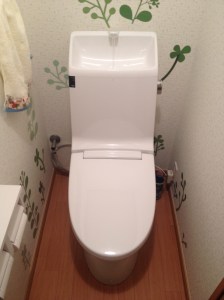
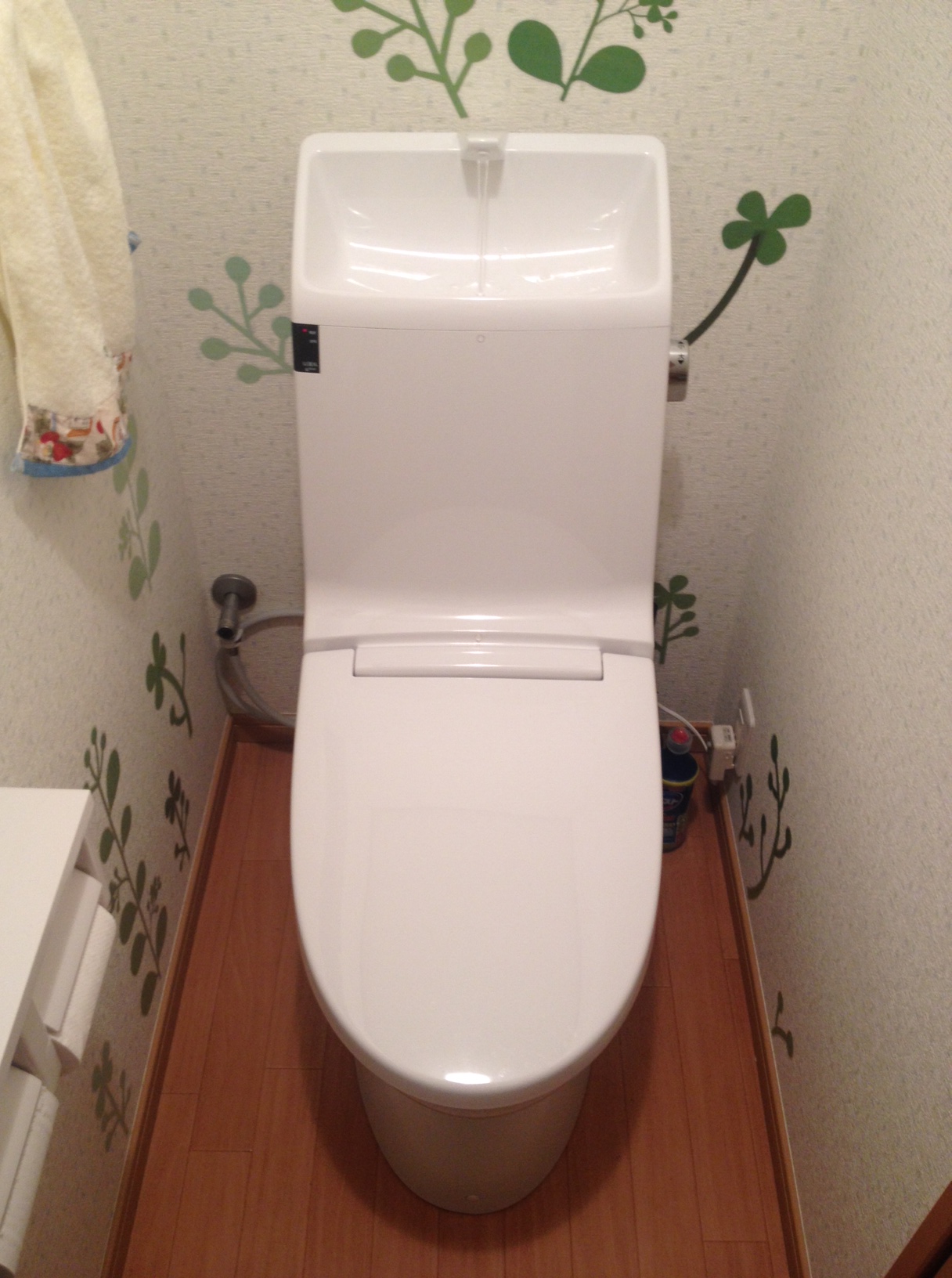
If there is a way to enhance life through automation, I think the Japanese have found it.  We loved the ubiquitous vending machines, which dispensed both hot and cold drinks from the same machine.  Some vending machines will even scan your body and suggest the drink you should select.  While the vending machines were fun and nice, the Japanese toilets were the best machine by far!  With a number of features such as heated seats and built in warm-water bidet functions, Japanese toilets are the best I have ever encountered.  We are trying to determine how we can have one installed in our home in the United States.
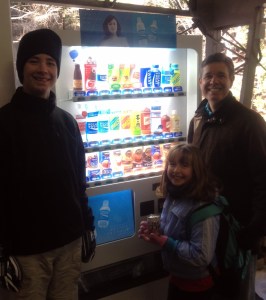
Vending Machine

Notice the hand washing basin at the top of the toilet

Notice the hand washing basin at the top of the toilet

10.  Kindness of People

We fell in love with Japanese people.  We left Japan with new friends who showered us with kindness:  Hiroko James, Naoto Nakamura, and Ryuichi Tsubuku.  We also were treated with kindness by countless people such as fellow passengers on trains, workers at markets, officials at train stations, and one dear man who took about fifteen minutes to walk us through streets of Tokyo to show us our destination.  While we bowed and said, “Arigato, Thank you,” it was not nearly enough to convey our true gratitude for their kindness.
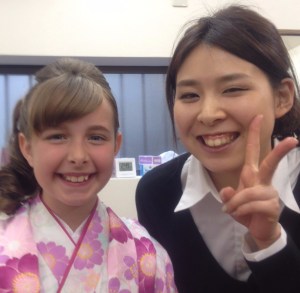
Rachel and Hair Dresser

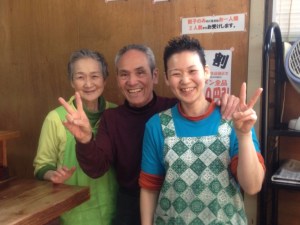
Noodle House Family

Koyasan, Japan

Koyasan - Lisa

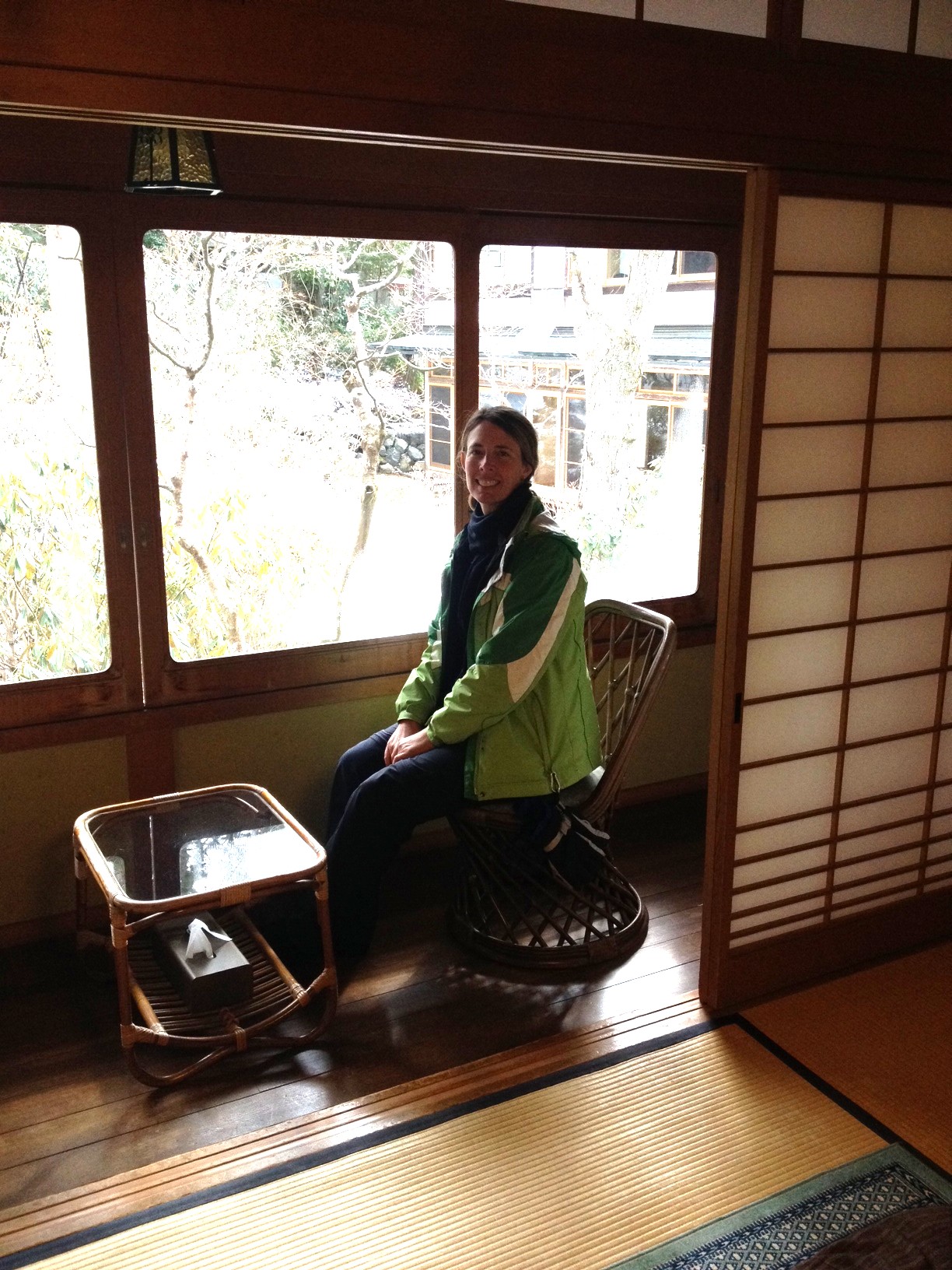
My wife, Lisa, in our room

After an excellent trip on Japan’s amazing train system, we rode the funicular up Mount Koya to Koyasan. February temperatures were cold, and snow covered the ground.

Koyasan was founded 1200 years ago by the Buddhist priest Kukai who was posthumously known as Kobu Daishi, and it remains an active monastic center in Esoteric Buddhism. Many of the temples receive guests in a Shukubo, an accommodation that is part of their activities, and we stayed at Shukubo Eko-in Temple.

The temple grounds are peaceful, and our accommodations were excellent. We appreciated many traditional Japanese details such as shoji (sliding doors), straw tatami mats on the floor, sleeping on futons, kotatsu (a low table on the floor with a heater underneath to keep your legs warm), green tea, yukata (casual robes), wearing slippers after removing our shoes, and onsen (hot baths with natural mineral water supplied from the Koyasan mountains).

Goma Fire Ritual

Goma Fire Ritual

Guests are invited to participate in the temple’s services, and we joined monks and other guests in an evening meditation service, which they graciously led in English as well as Japanese. As we meditated, I could see my breath in the cold air of the temple. The following morning, we attended the main morning service and a Goma Fire Ritual, which is believed to have cleansing effects physically and spiritually.


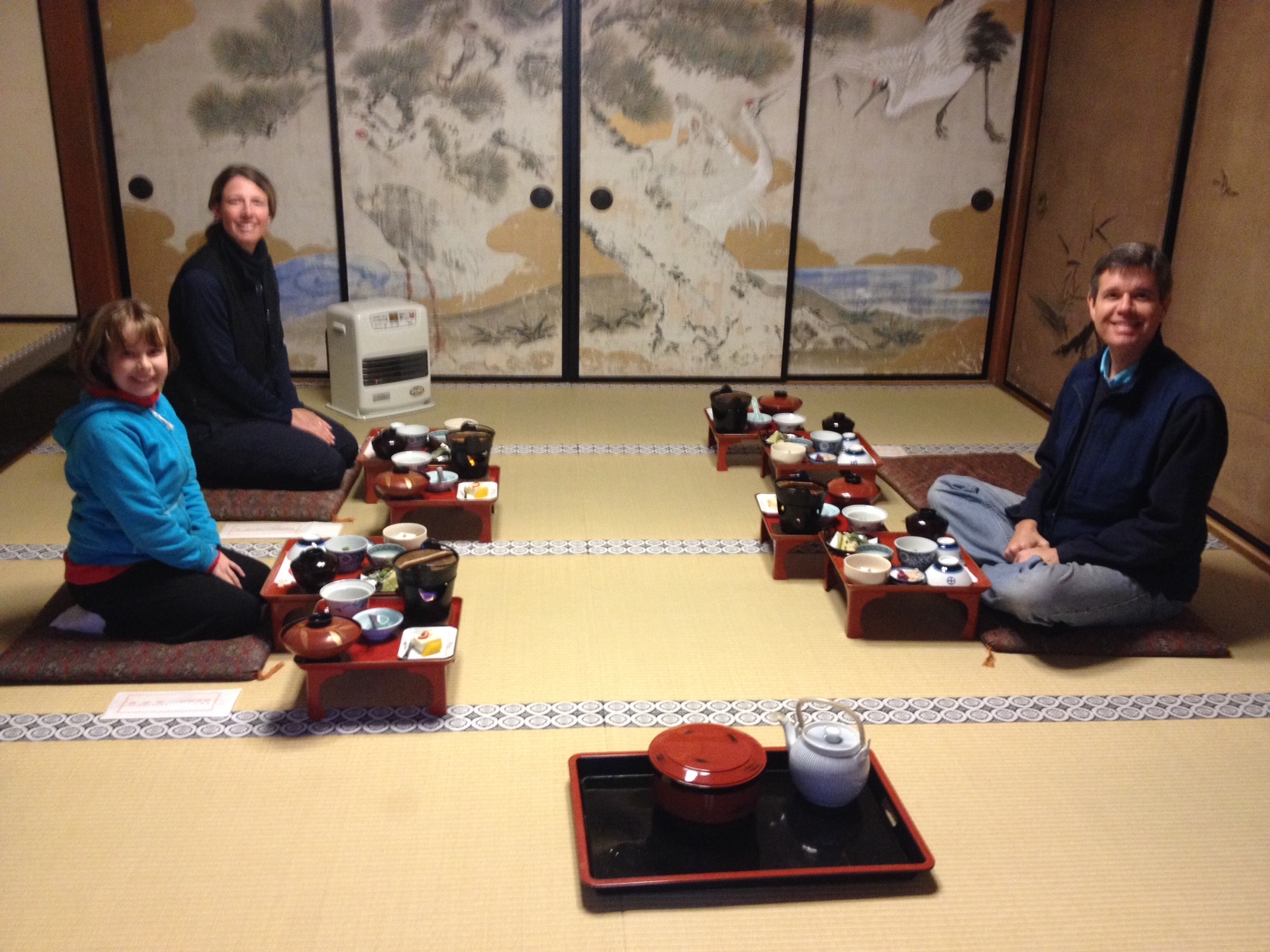
The delicious food was Syojin Ryori, Buddhist vegetarian cuisine, and we were served on trays in a private dining room.

One of my highlights was sitting with my children in worship experiences that were very different from those they have known in our Christian church. They noted both similarities (candles, sacred books, prayers, monetary offerings) and differences (sitting on the floor, a drum and gong, food on the altar, Buddhist monks).

Photo of dinner taken by my son, Jonathan

Photo of dinner taken by my son, Jonathan

One of my hopes in our round-the-world adventure is to allow our children to experience things that are both similar to and different from their regular lives — and to find that good things occur in a variety of places.

I think that happened at Shukubo Eko-in Temple.

Hiroshima

While traveling with our children during our family sabbatical, we have combined fun and entertaining activities with enriching, educational opportunities. During our travel in Japan, we visited Hiroshima, the location of the first atomic bombing on 6 August 1945.  At that time, Hiroshima was a city of 350,000. 


After arriving, we made our way to the Hiroshima Peace Memorial Park. We first went to the A-Bomb Dome, a concrete and metal building near the hypocenter that was severely damaged but still standing after the bombing. The building’s remains serve now as a silent memorial, and it is a gripping place to visit. 

Next, we walked through the park to the Peace Flame, which was lighted in 1964 and serves a double purpose. The flame is a memorial to bombing victims, and it will remain burning until nuclear weapons are eliminated from the earth. 


Near the flame is a saddle shaped monument that covers a cenotaph with the Register of Deceased A-bomb Victims.  It is estimated that as many as 140,000 people died from the bombing, subsequent fires, and radiation sickness. While the vast majority of victims were Japanese, people of other nationalities also died including international workers and prisoners of war. At the monument, a plaque reads:  “Let all the souls here rest in peace for we shall not repeat the evil.”
The atmosphere is quiet and somber and provides a helpful space both to remember the devastation and to reflect on the decision to drop the bomb.  

After several minutes, we went inside the Hiroshima Peace Memorial Museum.  Much of the museum is undergoing renovations, and we were not able to see the portion covering history leading to the bombing. 

Our tour began with the bombing itself, and this was quite jarring. The room includes a scale model of Hiroshima showing the detonation point about 600 meters (about 1800 feet) above the ground and the destruction inflicted across the city. Exhibits include tattered and burned clothing, twisted metal, charred roof tiles, and photos of physical maladies endured by survivors. An audio guide (well worth renting) includes information on victims, including many children making their way to school at the time of the bombing, and survivors who searched for them during the days after the blast. 

The museum, like other memorials to victims of violence or suffering, is unsettling but helpful by contextualizing the era and encouraging visitors to consider lessons they may learn.  Our family left the memorial park in quiet and later discussed our reflections after some time had passed. 


Before departing Hiroshima, we rode a bus around the city (included as part of our Japan Rail pass), which allowed us to see gleaming buildings and a modern city rebuilt after the war. The juxtaposition of destruction at the memorial park and a modern city teeming with life was a helpful reminder of the human spirit. 

Snow skiing in Japan

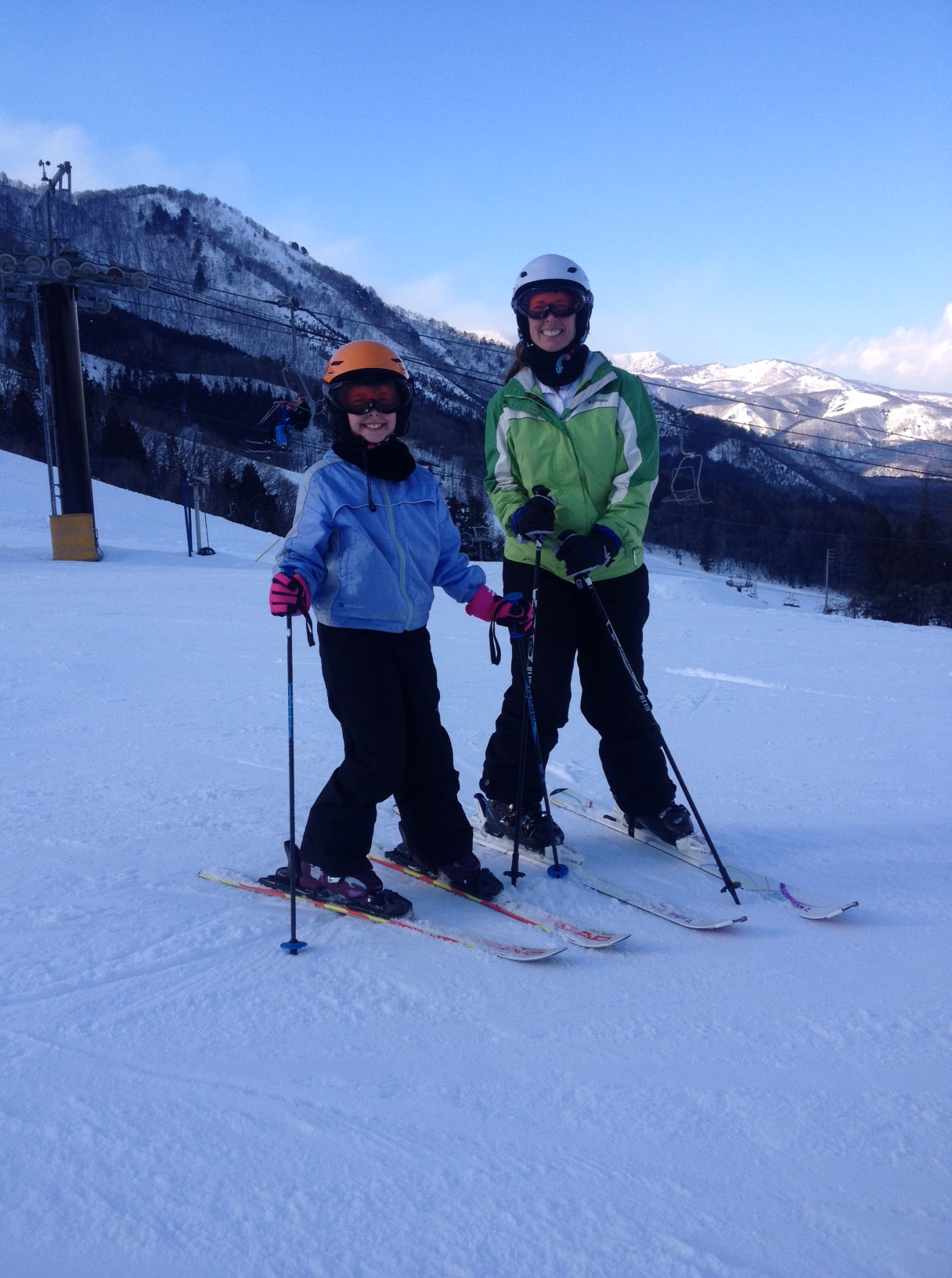
Family in ski gear

Before our children, Jonathan and Rachel, were born, my wife, Lisa, and I loved to go snow skiing. One of the many joys of living in New England for a dozen years was easy access to the slopes of Vermont, New Hampshire, and Maine. While Lisa was pregnant with our first child, we decided to skip a season of skiing, and before we knew it, fifteen years had passed since we hit the slopes.

Family Ski Lesson

Family Ski Lesson

While traveling around the world, we have tried to introduce new things to our children while also experiencing them ourselves. While in Japan, our family agreed that snow skiing should be added to our list of adventures. We traveled to the area around Nagano, the site of the 1998 Winter Olympics. We settled in Hakuba, which hosted the women’s and men’s downhill skiing championships during the Olympics. (This was more an interesting fact than anything affecting our lives because we never ventured near the Olympic ski trails!)

We rented a ski-in, ski-out apartment (a first for us, which was surprisingly affordable) at Hakuba Goryu Ski Area. We rented our equipment (which you don’t easily pack while travelling around the world), signed up for a family ski lesson on our first day, and began a wonderful time.

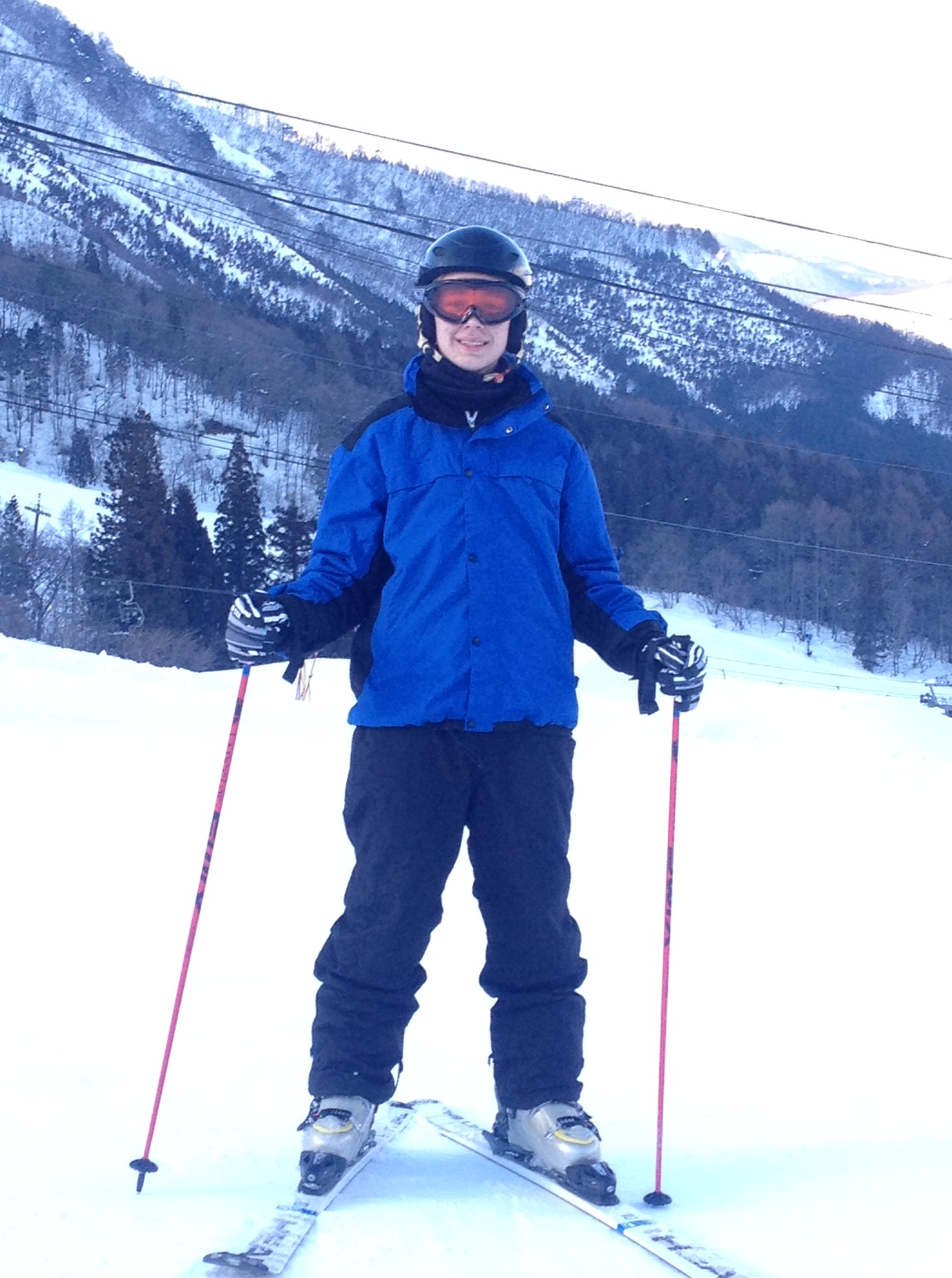
Jonathan on ski slopes

Jonathan on ski slopes

The conditions were incredible! Several feet of snow blanketed the ground when we arrived, about a foot of new snow fell during our first night, and powder was plentiful. We told our children not to expect such great skiing conditions every time they ski in the future.

Workers were wonderful with our children, public announcements were made in both Japanese and English, we had fun shopping in a Japanese market, and our time on the slopes went even better than we could have imagined. Both of our children learned something new, and they are now very good skiers. Rachel enjoyed an obstacle course on skis, and Jonathan ventured to the top of the mountain and skied all the way down! Lisa and I became reacquainted with skiing, and we realized that we still can do it — and we still love it.

Rachel and Lisa on the slopes

Rachel and Lisa on the slopes

And, most importantly, our family created memories that will last a lifetime.

Now, we are talking about plans for our next skiing adventure.

Tsukiji: Tokyo’s Fish Market

Tsukiji Sign

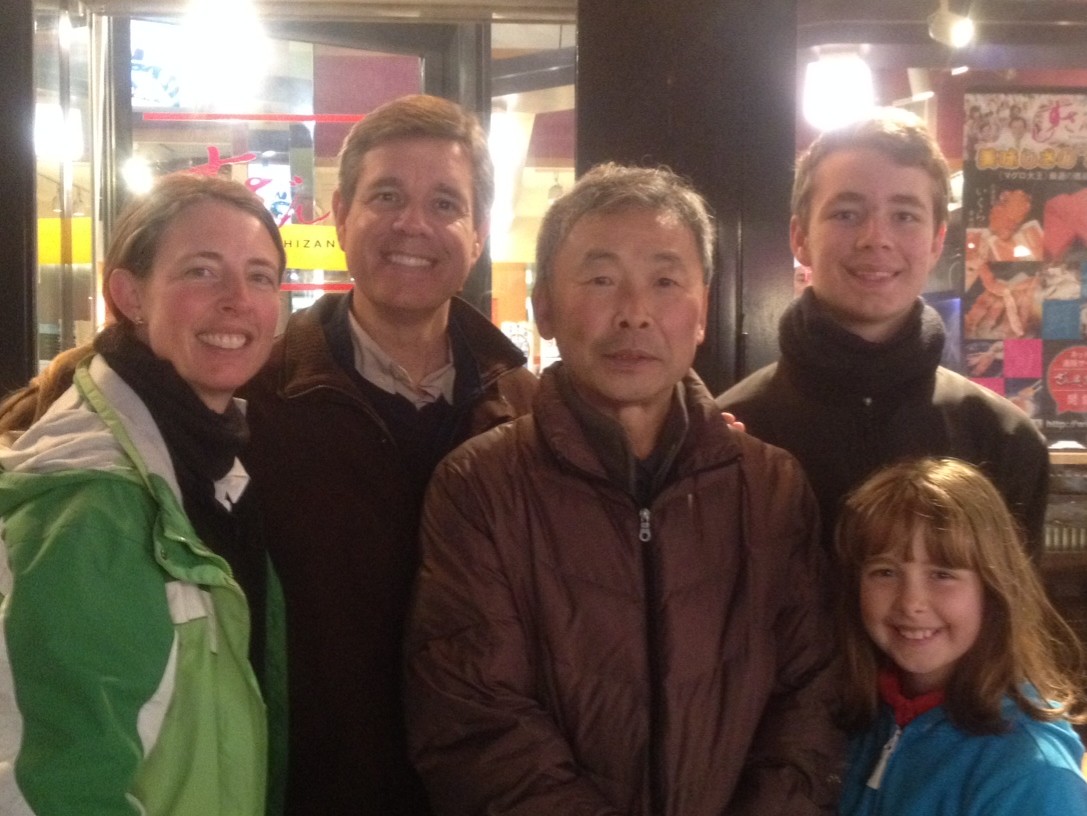
When the alarm sounded at 1:30 AM, the street outside our Tokyo apartment was quiet.  After having coffee and toast, my wife and I woke our children around 2:00 to get ready to travel to Tsukiji, the world-famous fish market.  We found a taxi around 2:30 and twenty minutes later, we met Mr. Naoto Nakamura, our excellent guide for a wonderful tour of Tsukiji.
Nic 2
 

If you consult lists of must-see things to do while in Tokyo, you will find “Tsukiji Tuna Auction” on nearly every list.  Tsukiji is said to be the world’s largest fish market, and 50,000 people come here six days a week to buy and sell seafood and produce.  And, eager tourists wander the market to glimpse the amazing spectacle.  Rather than wander, however, we were guided by a true expert.


A view of market from above

A view of market from above

Thanks to Mr. Nakamura (or Nick as he asked us to call him), who worked at the market for many years and now leads early-morning tours of Tsukiji, we saw amazing sights and learned previously unknown facts about seafood, auctions, and commerce in this part of Tokyo.  

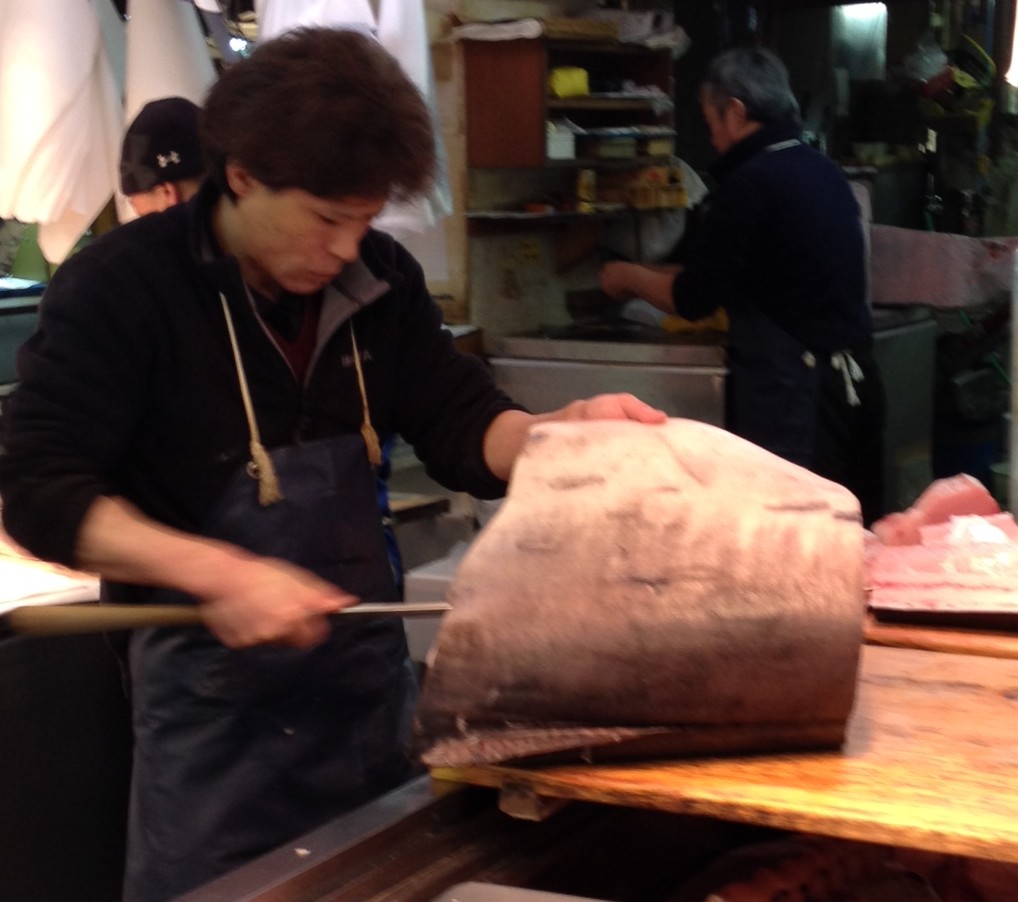
The highlight of the market is the tuna auction, and we saw both fresh and frozen tuna ready for auction.  The largest tuna up for auction on the day of our visit weighed 164 kilograms (about 362 pounds).  Prior to the auctions, bidders inspect the fish to evaluate quality and determine the price they will pay as they seek to satisfy their customers.

Tuna on right weighs 164 kg

Tuna on right weighs 164 kg


Besides the tuna, there are all manner of seafood including umi (sea urchin, a particular delicacy in Japan), eels, flounder, squid, and many more.  Fugu or blowfish (the famous or infamous Japanese fish that can be deadly if you eat a toxic portion) is for sale, and Nick says it tastes like chicken.  Hundreds of kinds of seafood from all around the world are sold at Tsukiji.

Bidders inspecting Umi

Bidders inspecting Umi

Umi auction

Umi auction

Worker filleting swordfish

Worker filleting swordfish

Although our tour began at 3:00 AM, the market was abuzz with activity. Trucks were arriving with loads of fish, fork lifts were zipping around delivering seafood and produce, and workers prepared for auctions and filled orders for customers.  The activity occurs at such a fever pitch that, according to Nick, the market averages more than one traffic accident each day it is opened.


As we walked around the market between 3:00 and 5:00 AM with bleary eyes, some workers were pausing for their lunch, having already worked the bulk of their day.  Activity slows dramatically by 9:00 AM, and nearly everything is finished by 11:00.


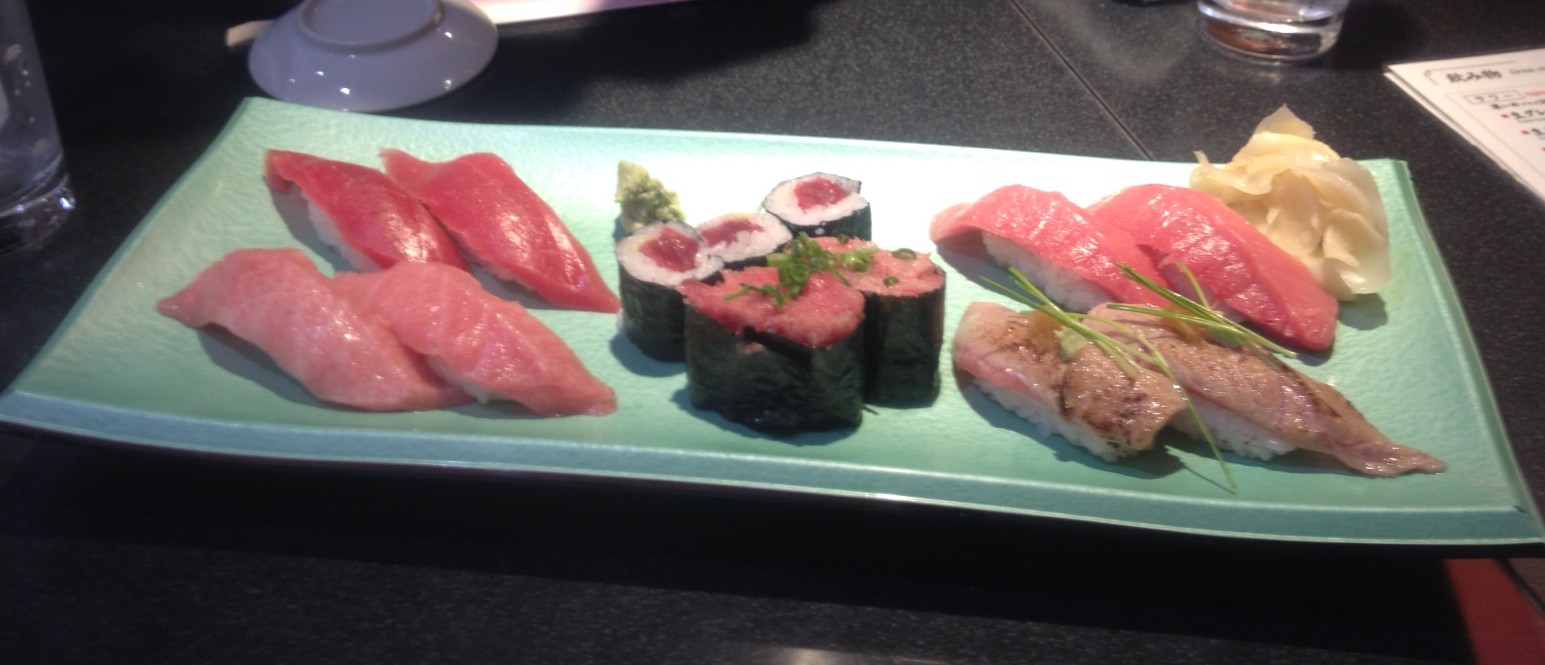
Sushi for breakfast

Sushi for breakfast

After a wonderful tour, Nick provided suggestions for a sushi restaurant very close to the market.  He took us to the door, introduced us to the staff, and helped us order.  Then, he bade us farewell as we entered to have sushi for breakfast.  The fish was delicious, the green tea plentiful, the wasabi pungent, and the pickled ginger spicy.  It was a wonderful ending to a fantastic tour! Our family will long remember our sushi breakfast, our tour of Tsukiji, and our fantastic morning with Mr. Naoto Nakamura.

We returned to our apartment very, very glad we experienced Tsukiji.  And, after a nap, we were ready to explore more of Tokyo.

Was it early to rise?  Yes.  Was it worth it?  Absolutely, yes!

New Zealand: A Post Card at Every Turn

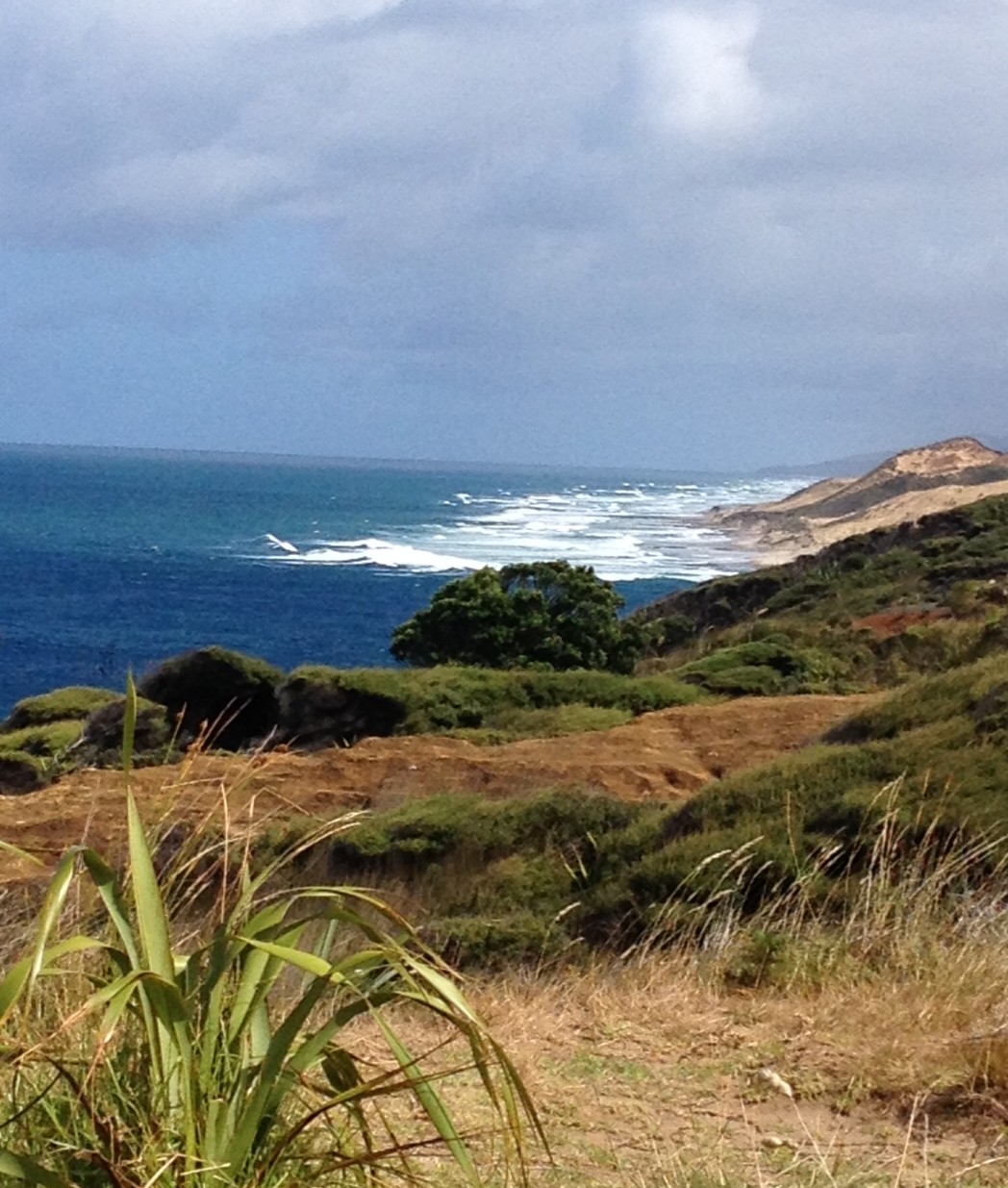
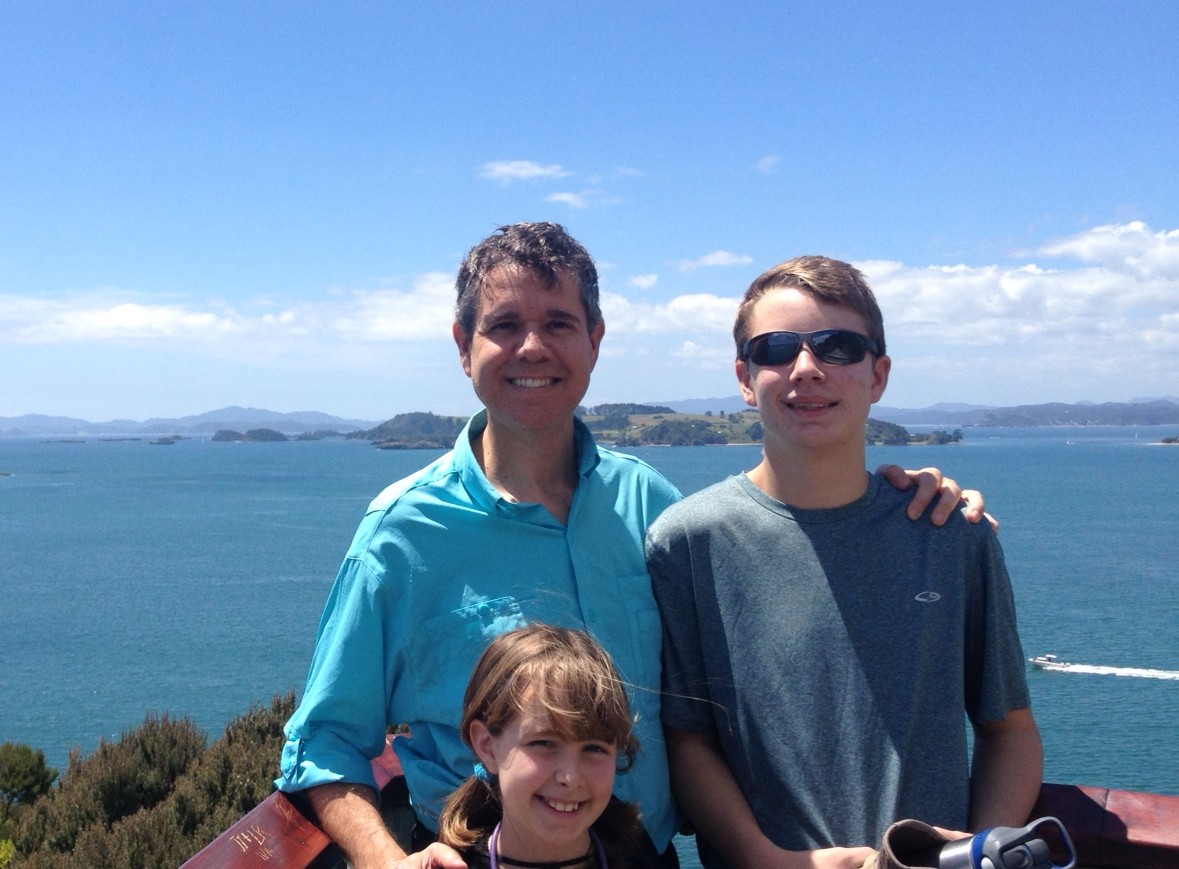
NZ PicWhile we were preparing to travel to New Zealand, a friend said, “New Zealand is a post card at every turn.” She was correct. The country is beautiful with mountains, pastures, bays, volcanoes, and coastal areas. We spent a month on the north island about three hours’ drive north of Auckland.

The only thing better than the natural beauty was the friendliness of the people. Everyone we met in New Zealand was kind, happy, helpful, curious about our background, and welcoming. We house-sat for a wonderful family, we joined the congregation at Kerikeri Baptist Church for worship, and we enjoyed meeting friendly people throughout our days in New Zealand.

There were many highlights of our time, but a few include:
Beautiful walks to the beach at Opito Bay
Daily walks in the fields surrounding our home
Great hikes to Rainbow Falls
Walking along 90 Mile Beach
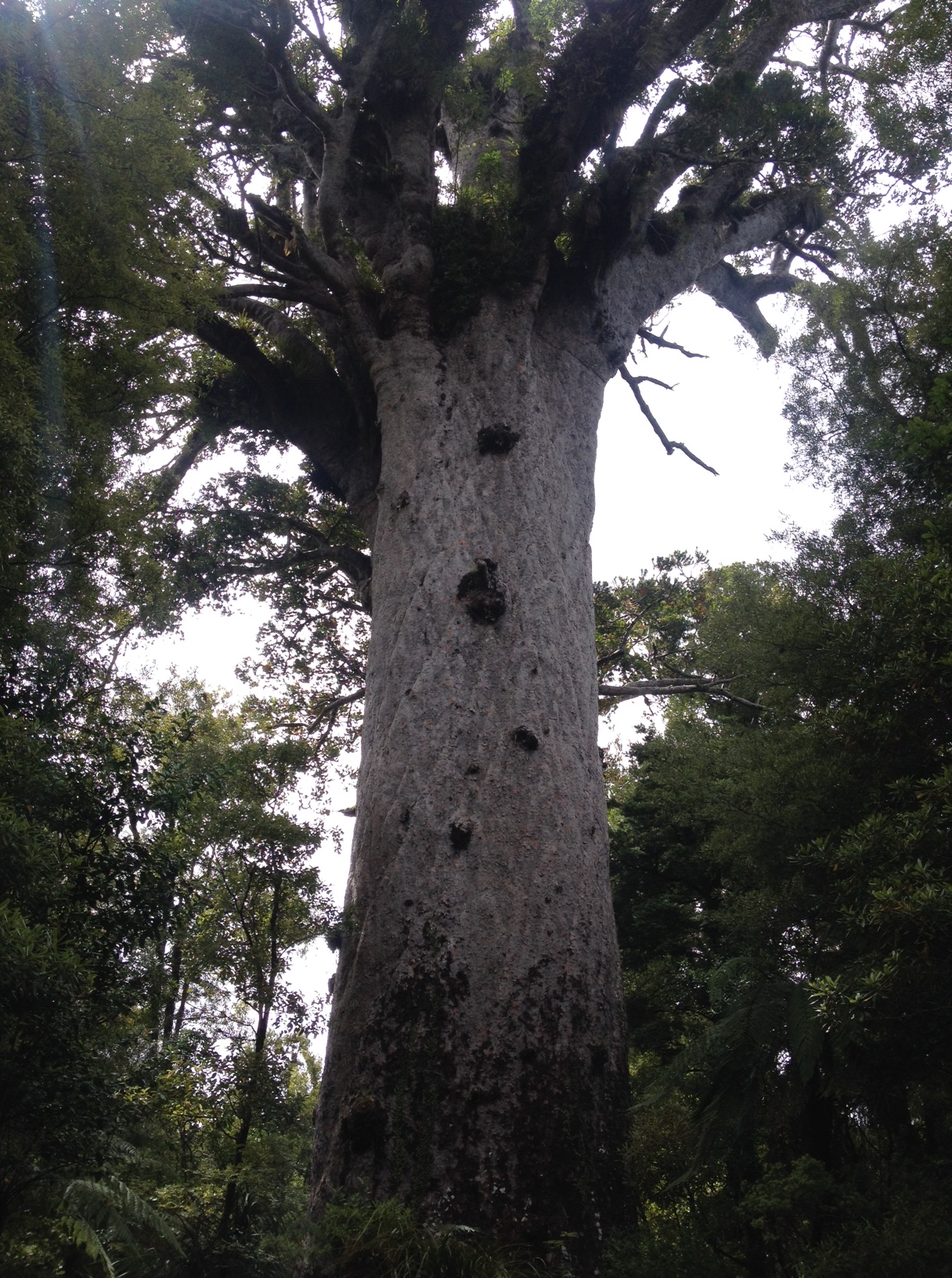
Seeing Tane Mahuta (“Lord of the Forest” in the Maori language), the oldest Kauri tree in New Zealand (believed to be about 2,500 years old)

Opito Bay

Opito Bay

One serendipitous joy during our stay in New Zealand was Waitangi Day, the day when New Zealanders celebrate the founding of their country. On 6 February 1840, more than 500 chiefs from the Maori (the native peoples of New Zealand) signed a treaty with representatives of the British crown outlining principles upon which the Maori and British crown would agree. There remain different understandings of the treaty and questions about whether it fairly treated all peoples, but New Zealanders often refer to the principles of the Waitangi Treaty as an important way in which peoples from different backgrounds can relate to one another.

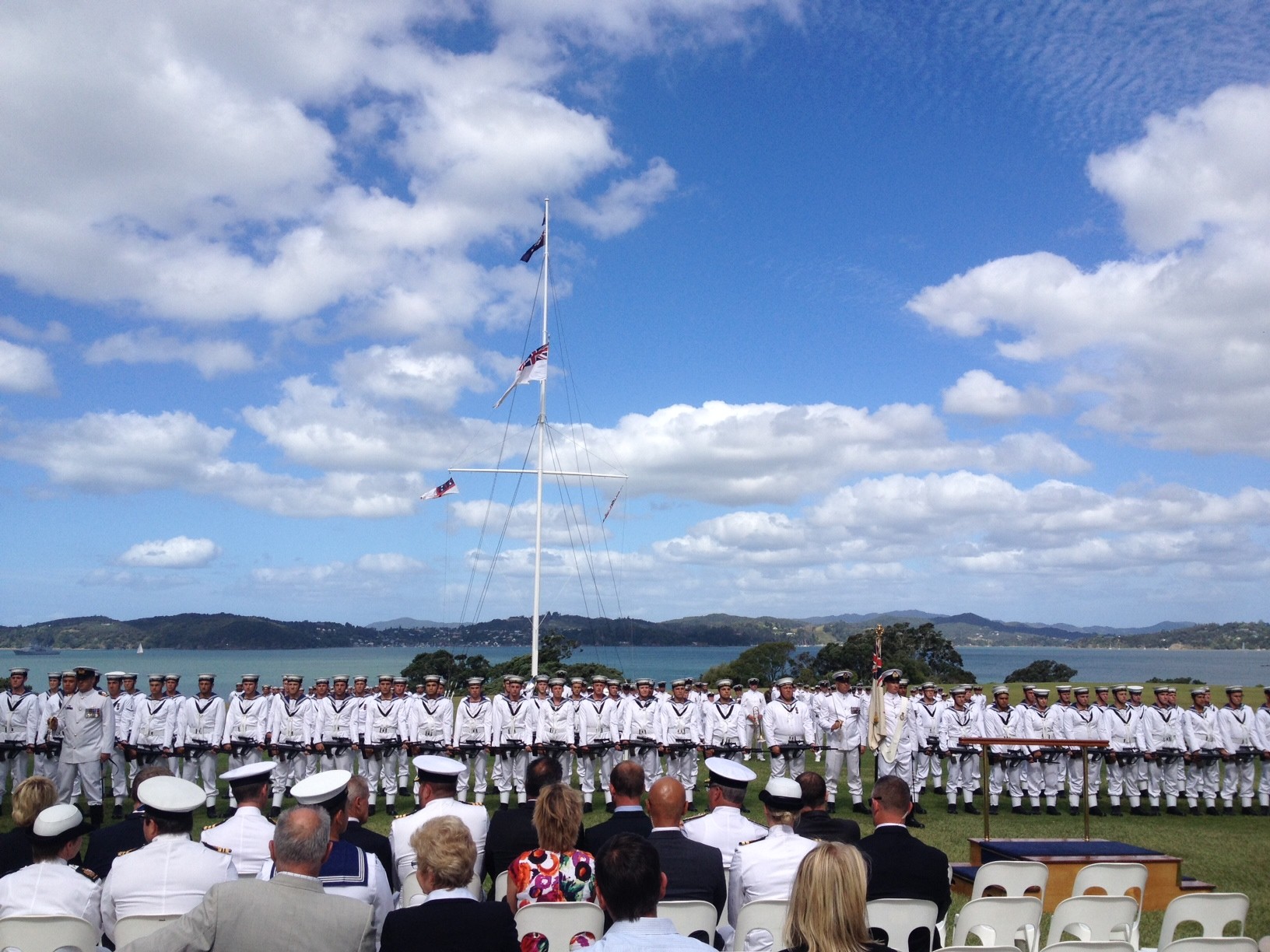
Some people have led protests about their treatment at Waitangi Day, and while these protests overwhelmingly have been peaceful, some people fear that Waitangi Day is marked by confrontation or even violence. Thankfully, our hosts dispelled this notion, and we enjoyed two excellent days at the 175th Waitangi Day festivities. On the first day, we enjoyed a ceremony led by the Royal Navy. We even sat four rows behind New Zealand’s Prime Minister at this event. And on the second day, performers and food stalls created a festive atmosphere.Waitangi Day

If you have an opportunity to visit New Zealand, take it. And, if you can be present for Waitangi Day, go! Share in the spirit of this treaty that seeks to guide positive relations between different peoples.

Rainbow Falls

Rainbow Falls


Tane Mahuta, "Lord of the Forest"

Tane Mahuta, “Lord of the Forest”

British and German Cemeteries in Normandy

In my last blog post, I wrote about our visit to the American cemetery near Omaha Beach, Normandy. We also visited British and German cemeteries in Normandy. The cemeteries are different in important ways that helped me realize the losses experienced by people from different sides of the conflict in World War II.

German Cemetery, La Cambe, France

German Cemetery, La Cambe, France

At the German cemetery at La Cambe, the remains of 21,000 German personnel are interred. The American cemetery at Omaha Beach is visited by more than one million people each year, and there were scores of people there during our visit. People walked among the American graves, filled the visitors center, and took part in organized tours. During our time at the German cemetery, however, there were only two other people present, and quiet filled the air.

As you enter the German cemetery, you can leaf through a book of names of those buried on the grounds. Near the end of the book are printed words that could apply to Germans, Americans, Brits, or nearly any other people:

Darkly rises the mound over the grave of the soldiers.
Darkly stands God’s command over the dead of the war.
Yet brightly glows the sky above the towering crosses,
More brightly still shines their comfort: The final word is God’s.

British Cemetery

British Cemetery

The British cemeteries around Normandy differ from the American cemetery in two significant ways. First, British cemeteries include remains of soldiers from different countries. We visited British cemeteries in Bayeaux and Ryes. At the Ryes cemetery, 335 Germans are buried along with the Allied dead.

Second, while grave markers in the American cemetery all are white and include minimal embellishment, tombstones in British cemeteries include individual epitaphs chosen by surviving family members. Walking through the graves, I read many moving testimonies. One marker says, “You were only one to all the world but all the world to us. Mam, Dad, Sister, Brother.”

Serjeant S. Barber, Royal Artillery. Died 2nd August 1944, Age 30.

Serjeant S. Barber, Royal Artillery. Died 2nd August 1944, Age 30.

Another grave marker was especially poignant. The tombstone for Serjeant S. Barber, Royal Artillery, who died on August 2, 1944, at age 30, includes words from his mother. It says,
Dear Son of Ann Barber. His father killed in action 1918 is buried at Conde. Remembered.

American Cemetery in Normandy

During our time in Normandy, we planned to visit the American cemetery to remember the soldiers who died there. What we did not expect, however, were deeply meaningful visits to British and German cemeteries. In this post, I will reflect on our visit to the American cemetery, and in the next post, I’ll write about our time at the German and British cemeteries.

Looking toward Omaha Beach

Looking toward Omaha Beach

The Normandy American Cemetery and Memorial sits high above Omaha Beach near the towns of Saint-Laurent-sur-Mer and Colleville-sur-Mer. The American Battle Monuments Commission maintains the cemetery, which is picturesque with white grave markers in neat rows. The grounds are immaculately kept, and the serenity that fills the place is a fitting memorial to the brave service members who died in Normandy. Much like Arlington National Cemetery near Washington, DC, the setting is moving and inspiring.

The American cemetery contains the graves of 9,387 service members, and the names of 1,557 service members are inscribed on the Walls of the Missing.

In addition to the grounds, there is an excellent visitors center, which opened in 2007. You can learn the larger story of Operation Overlord and hear stories of individual men and women whose lives were altered in Normandy. Some of them died there, some were injured, and others lost their sons, husbands, fathers, or brothers.

The Spirit of American Youth Rising from the Waves, bronze statue at American cemetery

The Spirit of American Youth Rising from the Waves, bronze statue at American cemetery

One particularly moving experience is the movie, Letters, which focuses on letters written by service men who died in Normandy. While hearing their letters to loved ones and seeing pictures of these young men before and during their military service, I realized the depth of the loss when they died in Normandy.

Visiting the cemetery is well worth the time and effort involved. It is indeed a fitting memorial to the American service members who died on D-Day and in the Battle of Normandy.

A Hymn of Peace

As our family prepared to depart from France, we arrived in Paris on 7 January. As we checked into our hotel, we saw a television monitor with scenes from the attack at Charlie Hebdo. At that moment, the gunmen were still at large and believed to be northeast of Paris in the direction where we were staying. Police presence was heavy that day and again at the airport as we departed the next day. This was a chilling reminder that hostility still permeates much of our world.

British Cemetery, Ryes, France

British Cemetery, Ryes, France

Just a few days before, while in Normandy, our family visited the American, German, and British cemeteries. (I will post about our experiences there in the coming days.)

While at the cemeteries, I reflected on one of my favorite hymns, “This Is My Song, A Hymn of Peace.” While serving as a pastor in the United States, I often included this hymn in our worship on the Sunday closest to July 4, when Americans celebrate the founding of the country.

The hymn reminds me that many people from many countries love their homelands, and it calls people to peace that transcends national borders.

Some stanzas were written by Lloyd Stone in the years between World Wars I and II. Other words were written by Georgia Harkness, a United Methodist theologian and, like me, a graduate of Boston University. The hymn, which is set to the tune Finlandia, says:

This is my song, O God of all the nations,
a song of peace for lands afar and mine;
this is my home, the country where my heart is;
here are my hopes, my dreams, my holy shrine:
but other hearts in other lands are beating
with hopes and dreams as true and high as mine.

My country’s skies are bluer than the ocean,
and sunlight beams on cloverleaf and pine;
but other lands have sunlight too, and clover,
and skies are everywhere as blue as mine:
O hear my song, thou God of all the nations,
a song of peace for their land and for mine.

May truth and freedom come to every nation;
may peace abound where strife has raged so long;
that each may seek to love and build together,
a world united, righting every wrong;
a world united in its love for freedom,
proclaiming peace together in one song.

Given the recent events in France, the prayer of this song is especially fitting. May it be so.

American cemetery, Omaha Beach, Normandy, France

American cemetery, Omaha Beach, Normandy, France